

$.
31,500.000$.35,000.000
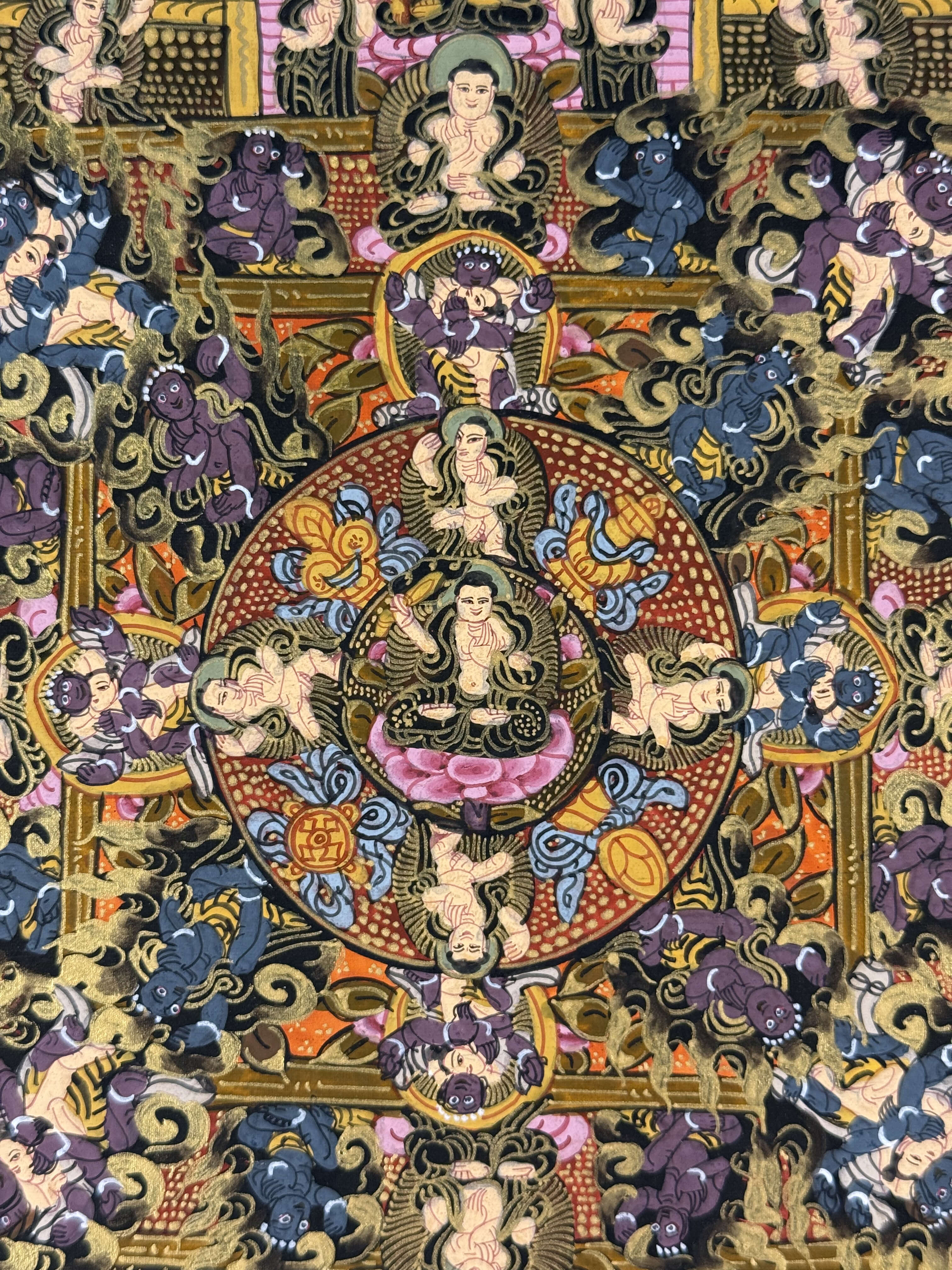
Mandalas are used in meditation, rituals, and tantric practices, especially in Tibetan Buddhism. The center usually represents the enlightened mind or the Buddha, symbolizing the inner journey towards spiritual awakening. Creating and visualizing the mandala helps practitioners focus their mind and realize the interconnectedness of all beings.
Some famous mandalas include the Five Dhyani Buddhas Mandala, each representing a different aspect of enlightened consciousness.
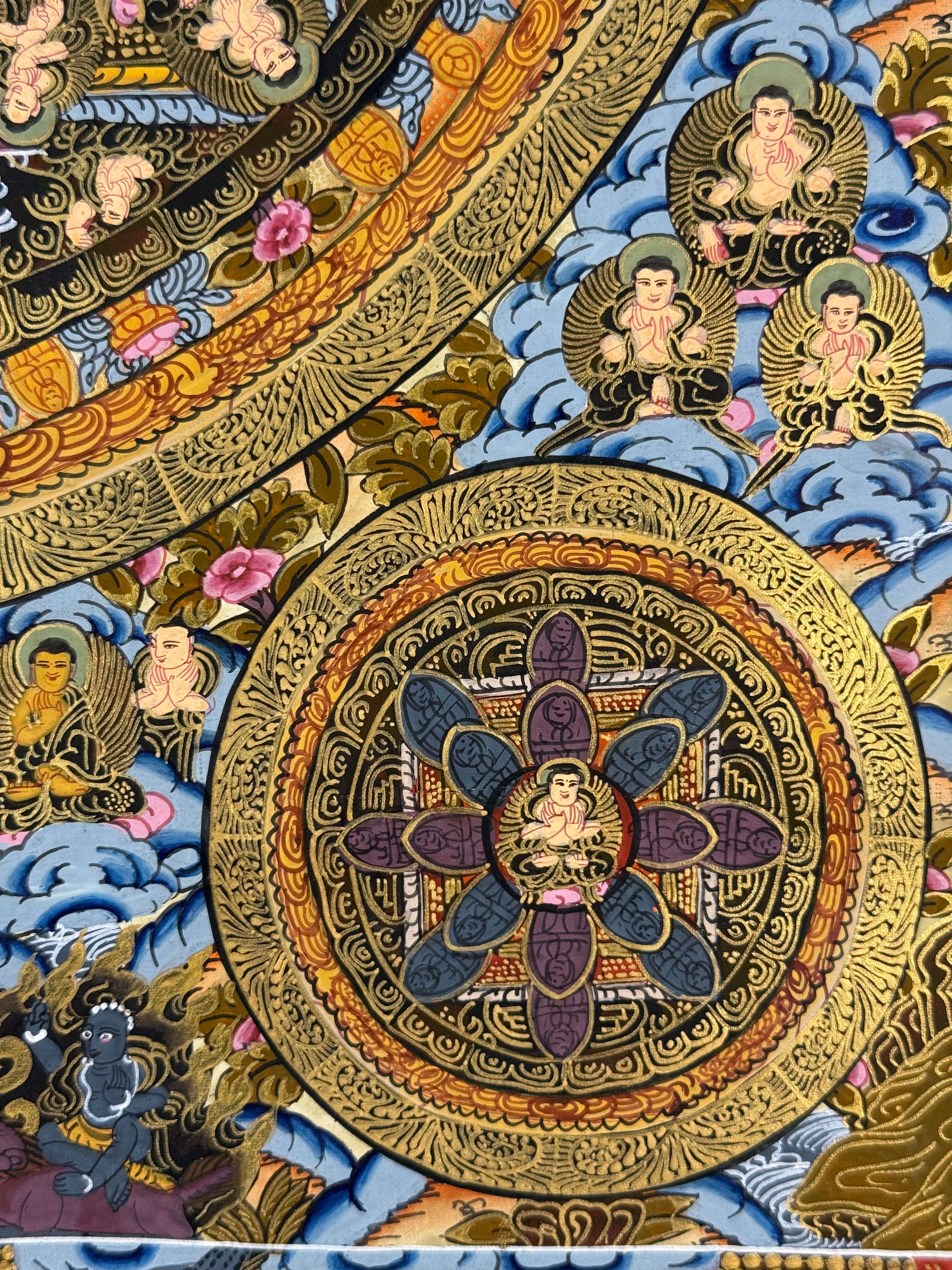
The Buddha Mandala is a sacred, symbolic diagram used in Buddhist art and meditation to represent the universe, the mind of the Buddha, and the path to spiritual enlightenment. Typically designed in a circular format, the mandala is highly structured and filled with intricate patterns, deities, and symbolic imagery. At the center of the mandala is often a figure of a Buddha, such as Vairocana, representing the enlightened mind and spiritual awakening.
Surrounding the central figure are various geometric shapes, lotus petals, and divine beings, all positioned with precise meaning. The outer rings of the mandala represent layers of consciousness, protective barriers, or the outer universe. The symmetry and balance in the design reflect the cosmic harmony and the order of existence.
Mandalas are not only decorative but serve as visual aids for meditation, particularly in Tantric and Tibetan Buddhism. Practitioners visualize themselves entering the mandala, moving inward from the outer edge toward the center, symbolizing the inner journey toward enlightenment. The creation of a mandala especially sand mandalas is often done as a ritual, and it is destroyed afterward to signify impermanence.


Lorem ipsum dolor sit amet, consectetur adipisicing elit. Mollitia iste laborum ad impedit pariatur esse optio tempora sint ullam autem deleniti nam in quos qui nemo ipsum numquam.




Add A Review
Your email address will not be published. Required fields are marked
Your Rating *
You need to Login OR Register