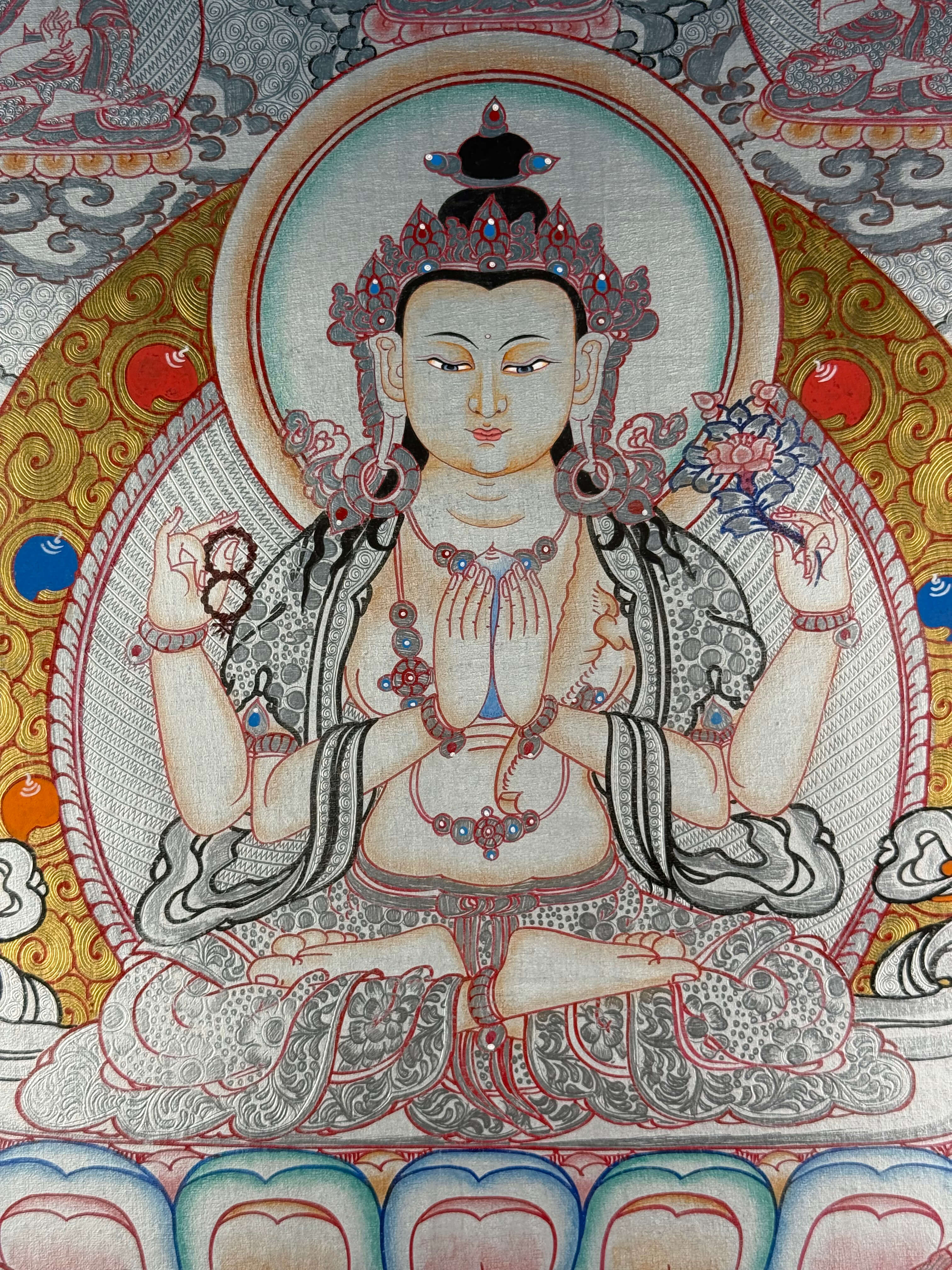


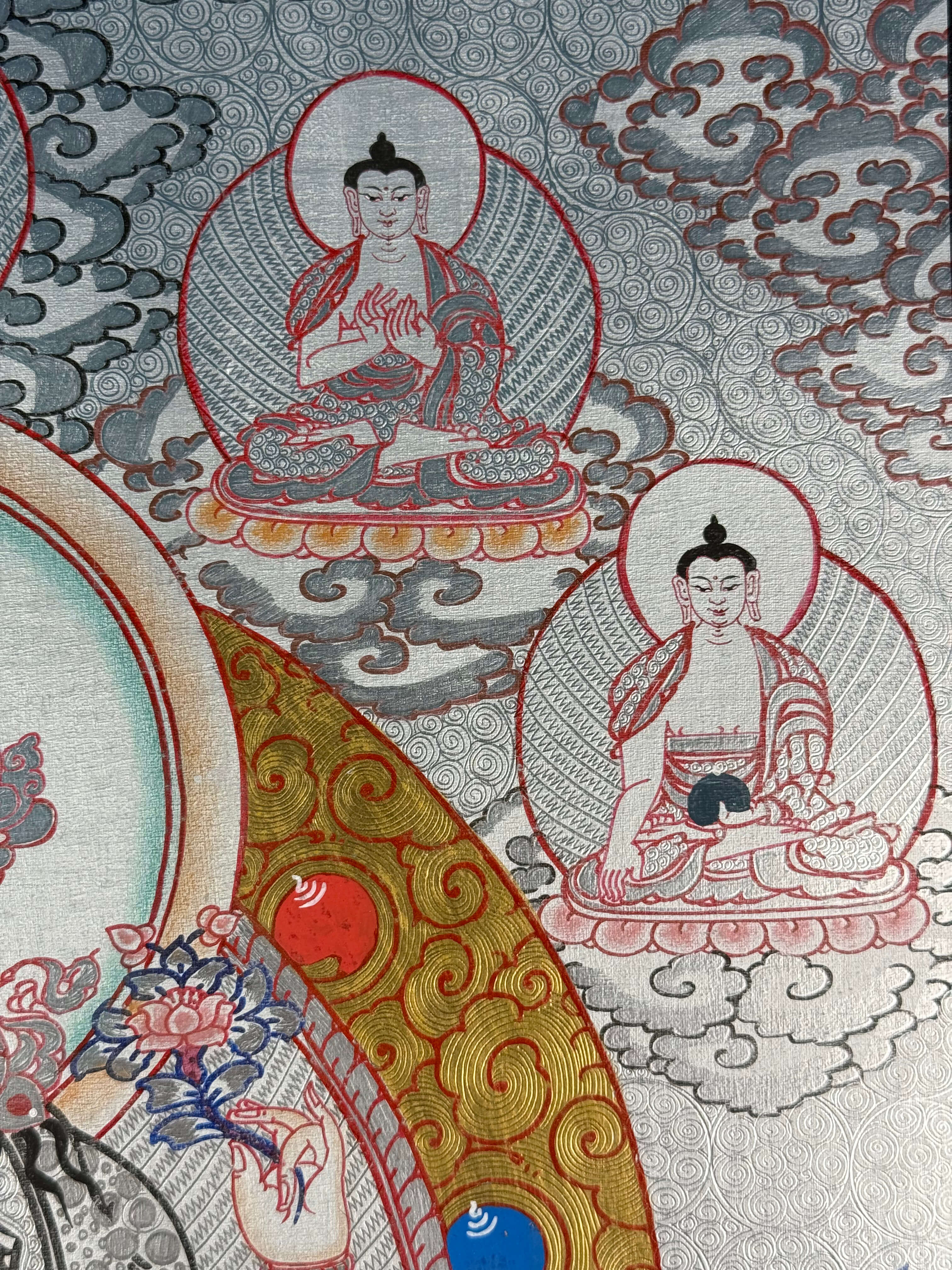

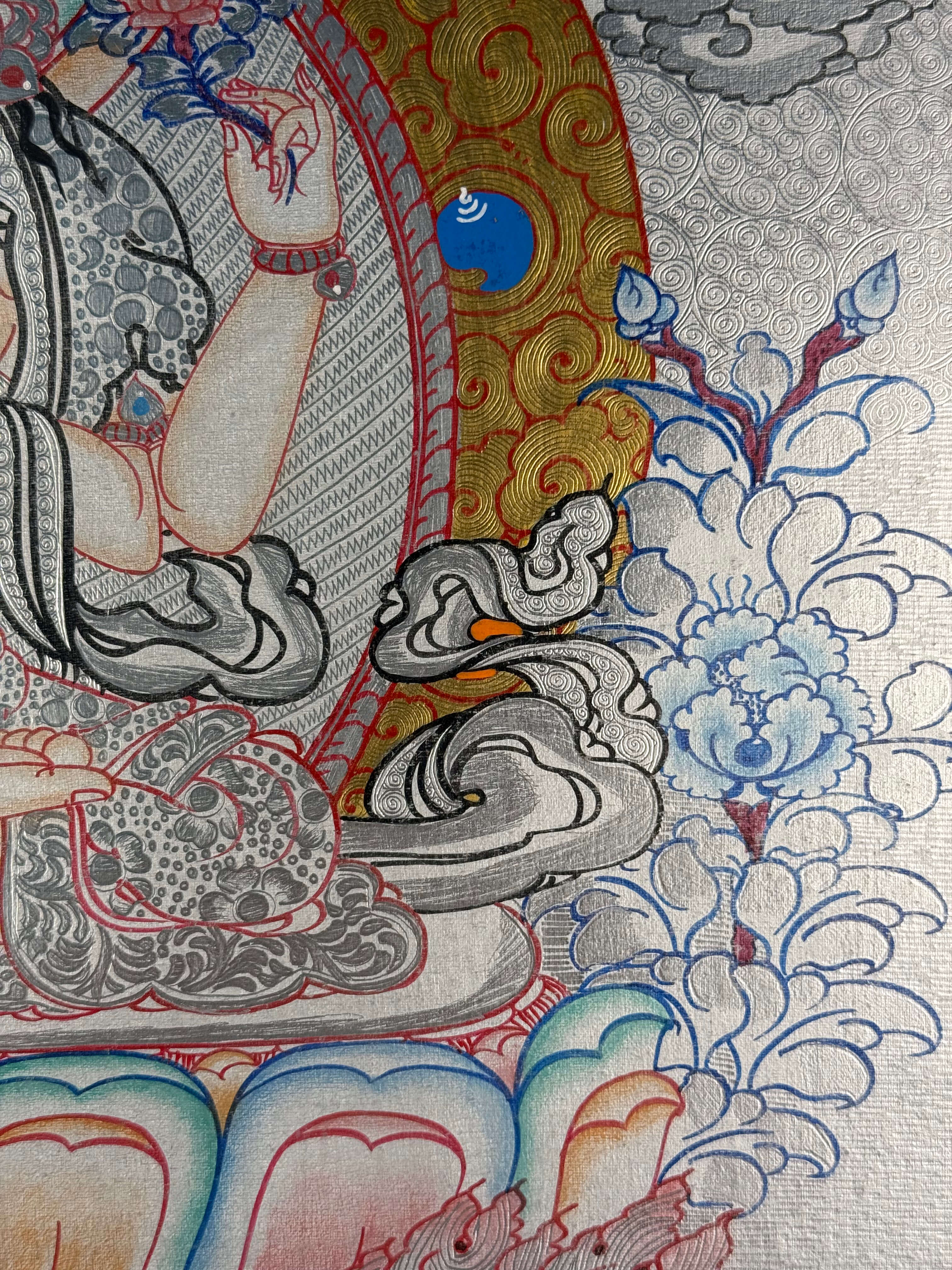


Changrezing, also known as Chenrezig, is a sacred figure in Tibetan Buddhism who represents Avalokiteshvara, the Bodhisattva of Compassion. He symbolizes infinite love and mercy for all beings and is deeply worshipped across the Himalayan regions. Often depicted with four arms and holding symbolic items like a lotus and prayer beads, Changrezing is associated with the mantra “Om Mani Padme Hum.” Believed to be the protector of Tibet, his image is commonly found in monasteries and homes, and the Dalai Lamas are considered his incarnations.




Manjushree is a bodhisattva in Mahāyāna Buddhism symbolizing wisdom. He is often depicted as a youthful figure holding a flaming sword (cutting ignorance) and a lotus with a scripture (symbolizing knowledge). In Nepalese legend, he is credited with creating the Kathmandu Valley by draining a lake, making the land habitable. Manjushree is highly revered in Tibetan, Chinese, Japanese, and Nepali Buddhist traditions. His mantra “Oṃ A Ra Pa Ca Na Dhīḥ” is chanted to enhance wisdom and understanding.
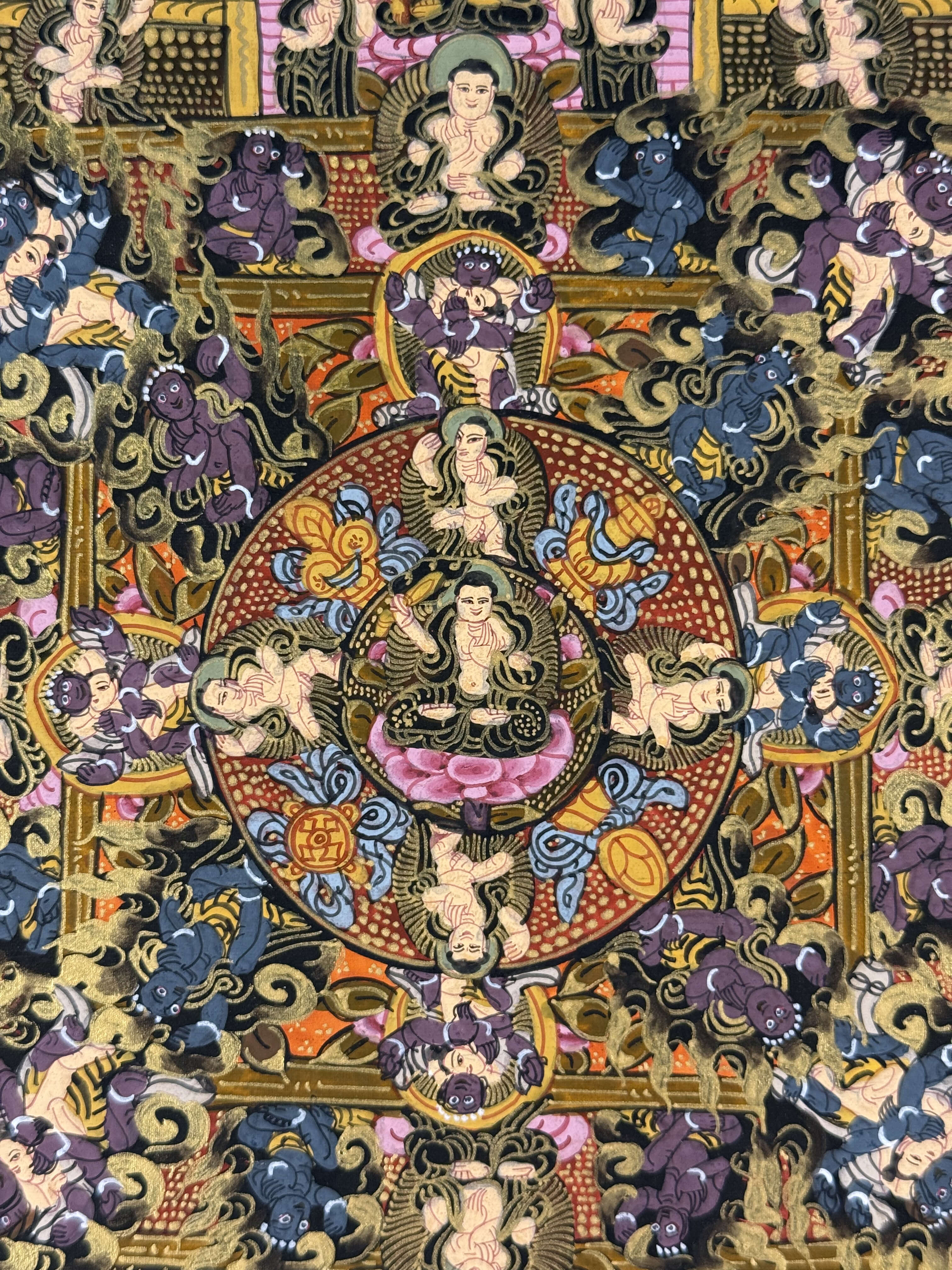


Mandalas are used in meditation, rituals, and tantric practices, especially in Tibetan Buddhism. The center usually represents the enlightened mind or the Buddha, symbolizing the inner journey towards spiritual awakening. Creating and visualizing the mandala helps practitioners focus their mind and realize the interconnectedness of all beings.
Some famous mandalas include the Five Dhyani Buddhas Mandala, each representing a different aspect of enlightened consciousness.


Mandalas are not only decorative but serve as visual aids for meditation, particularly in Tantric and Tibetan Buddhism. Practitioners visualize themselves entering the mandala, moving inward from the outer edge toward the center, symbolizing the inner journey toward enlightenment. The creation of a mandala—especially sand mandalas—is often done as a ritual, and it is destroyed afterward to signify impermanence.


Mandalas are not only decorative but serve as visual aids for meditation, particularly in Tantric and Tibetan Buddhism. Practitioners visualize themselves entering the mandala, moving inward from the outer edge toward the center, symbolizing the inner journey toward enlightenment. The creation of a mandala—especially sand mandalas—is often done as a ritual, and it is destroyed afterward to signify impermanence.


Mandalas are not only decorative but serve as visual aids for meditation, particularly in Tantric and Tibetan Buddhism. Practitioners visualize themselves entering the mandala, moving inward from the outer edge toward the center, symbolizing the inner journey toward enlightenment. The creation of a mandala—especially sand mandalas—is often done as a ritual, and it is destroyed afterward to signify impermanence.


The White Tara mantra, "Om Tare Tuttare Ture Mama Ayuh Punya Jñana Pushtim Kuru Svaha," is a powerful Buddhist chant associated with the goddess White Tara, who symbolizes compassion, healing, long life, and serenity. This mantra is recited to promote physical and emotional healing, increase longevity, and enhance spiritual well-being. White Tara is especially known for her seven eyes, which represent her watchful compassion over all beings. The mantra invokes her blessings to remove suffering, grant wisdom, and nurture positive energy in life.


The Green Tara mantra, "Om Tare Tuttare Ture Soha," is a powerful chant dedicated to Green Tara, the Buddhist goddess of compassion, protection, and swift action. She is known as the "Mother of Liberation" and is believed to offer immediate help in overcoming fears, obstacles, and dangers. The mantra is simple yet deeply meaningful, invoking Tara’s energy to provide courage, remove inner and outer troubles, and bring peace and strength. Reciting this mantra is believed to bring quick aid, spiritual guidance, and emotional healing.


Changrezing, also known as Chenrezig, is a sacred figure in Tibetan Buddhism who represents Avalokiteshvara, the Bodhisattva of Compassion. He symbolizes infinite love and mercy for all beings and is deeply worshipped across the Himalayan regions. Often depicted with four arms and holding symbolic items like a lotus and prayer beads, Changrezing is associated with the mantra “Om Mani Padme Hum.” Believed to be the protector of Tibet, his image is commonly found in monasteries and homes, and the Dalai Lamas are considered his incarnations.