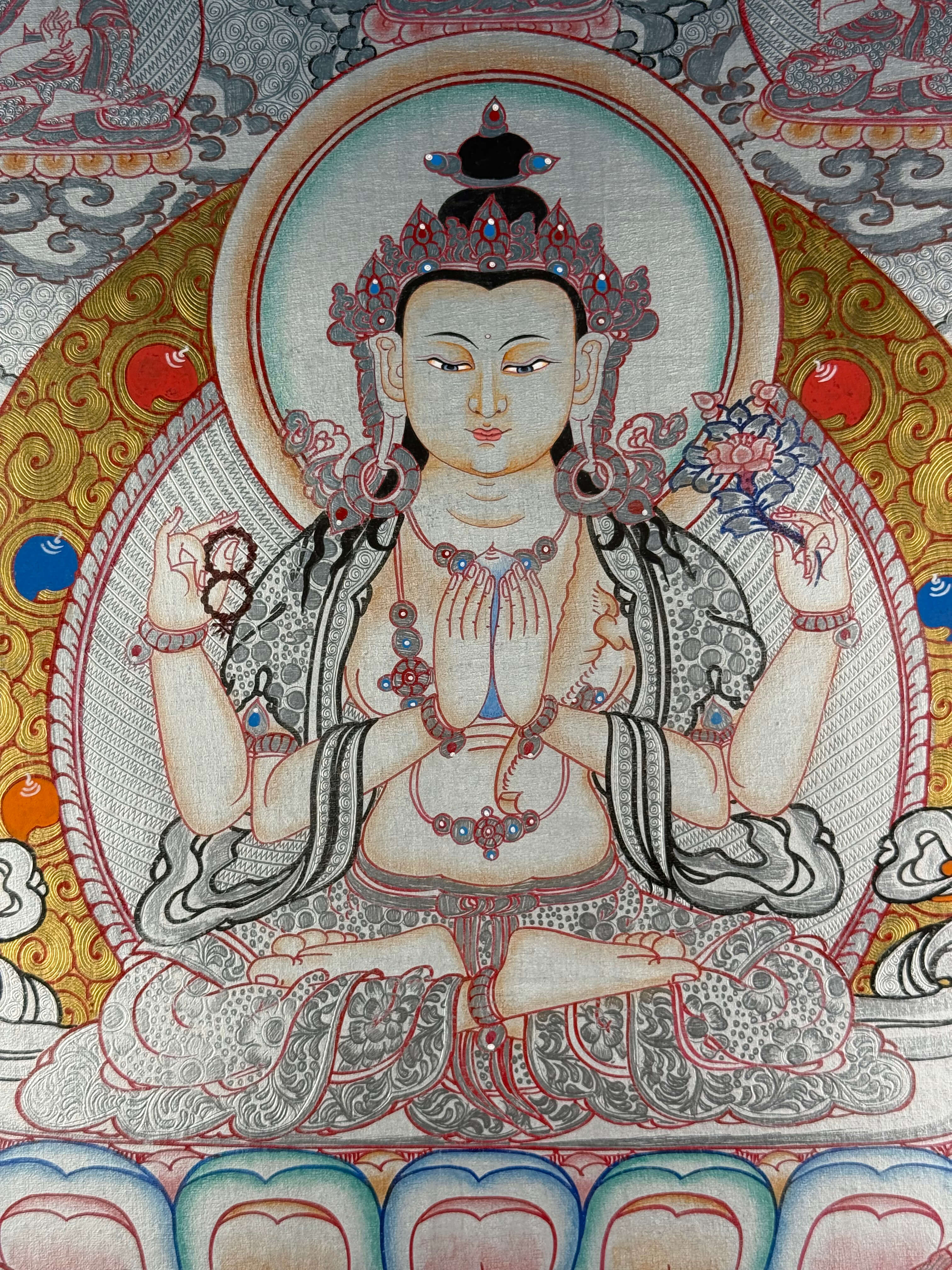


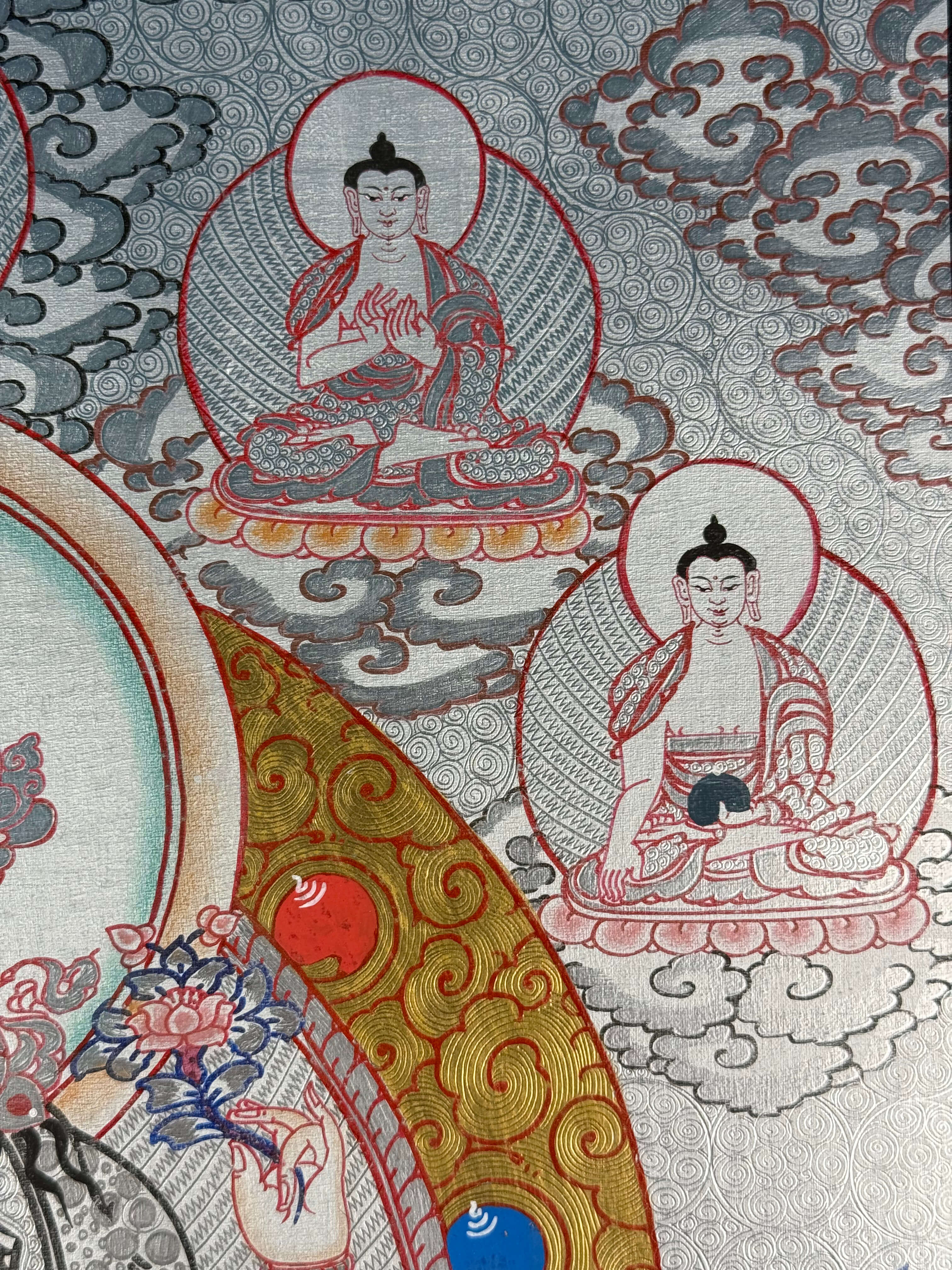

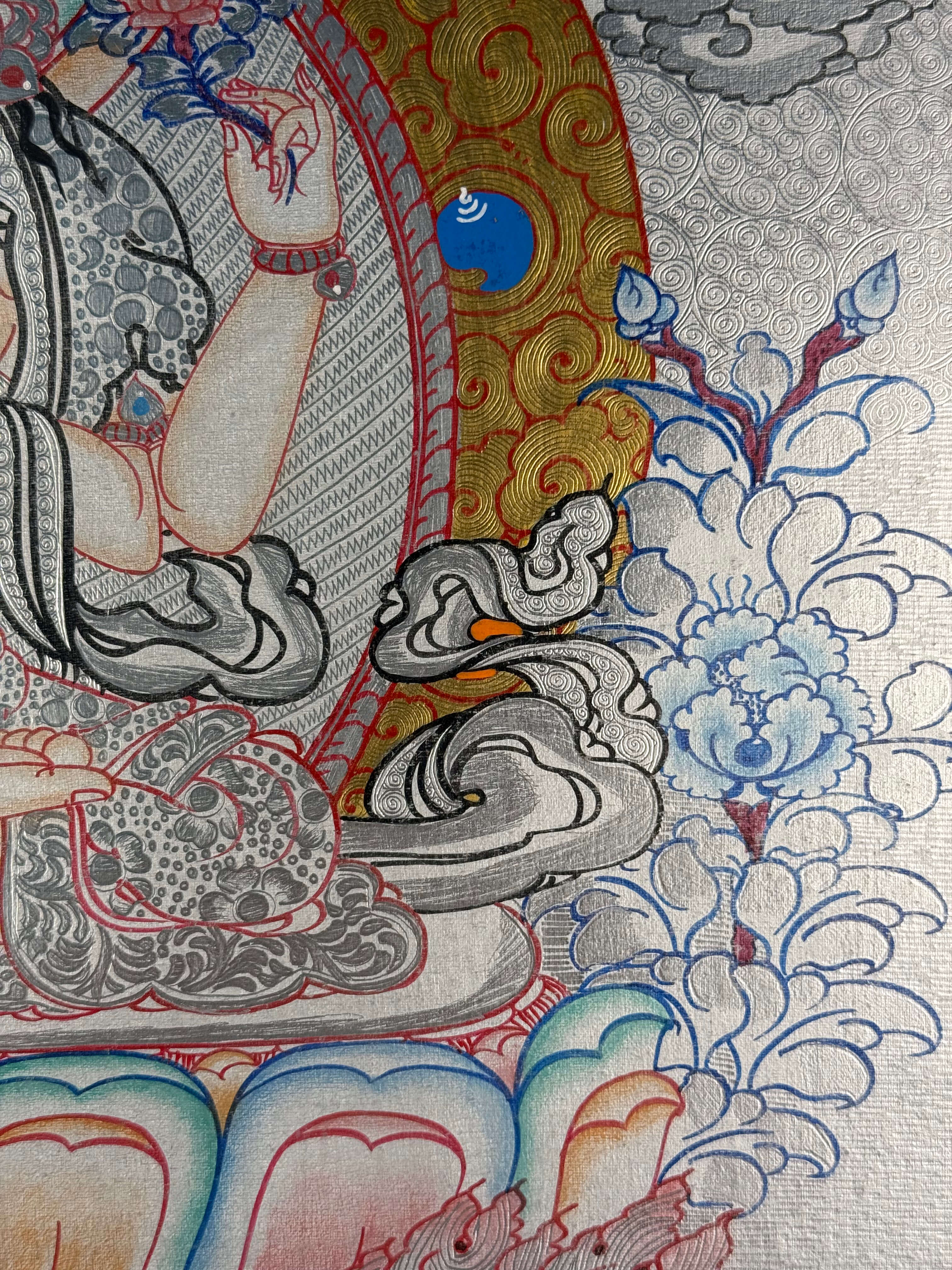


Changrezing, also known as Chenrezig, is a sacred figure in Tibetan Buddhism who represents Avalokiteshvara, the Bodhisattva of Compassion. He symbolizes infinite love and mercy for all beings and is deeply worshipped across the Himalayan regions. Often depicted with four arms and holding symbolic items like a lotus and prayer beads, Changrezing is associated with the mantra “Om Mani Padme Hum.” Believed to be the protector of Tibet, his image is commonly found in monasteries and homes, and the Dalai Lamas are considered his incarnations.


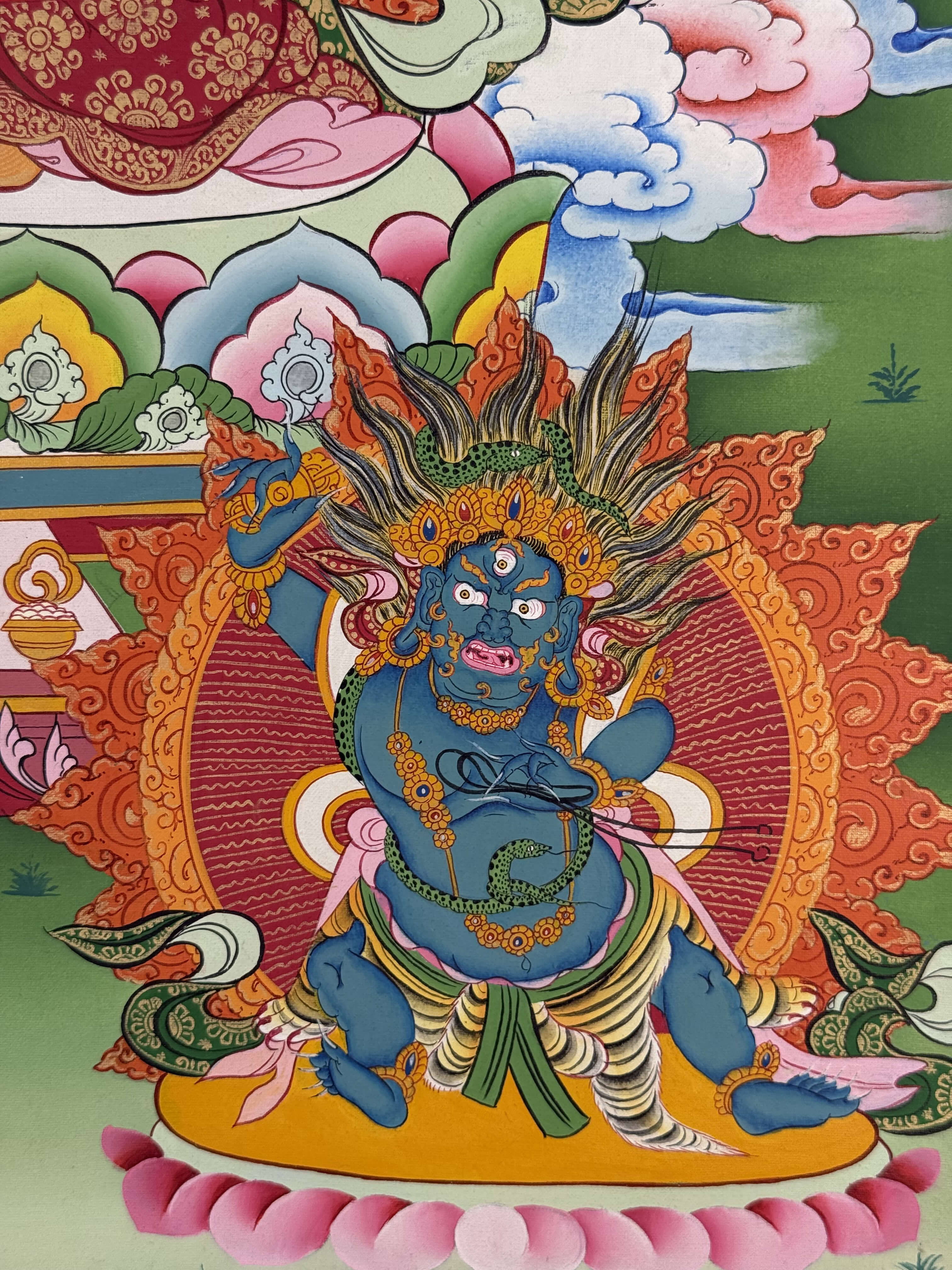


Manjushree is a bodhisattva in Mahāyāna Buddhism symbolizing wisdom. He is often depicted as a youthful figure holding a flaming sword (cutting ignorance) and a lotus with a scripture (symbolizing knowledge). In Nepalese legend, he is credited with creating the Kathmandu Valley by draining a lake, making the land habitable. Manjushree is highly revered in Tibetan, Chinese, Japanese, and Nepali Buddhist traditions. His mantra “Oṃ A Ra Pa Ca Na Dhīḥ” is chanted to enhance wisdom and understanding.
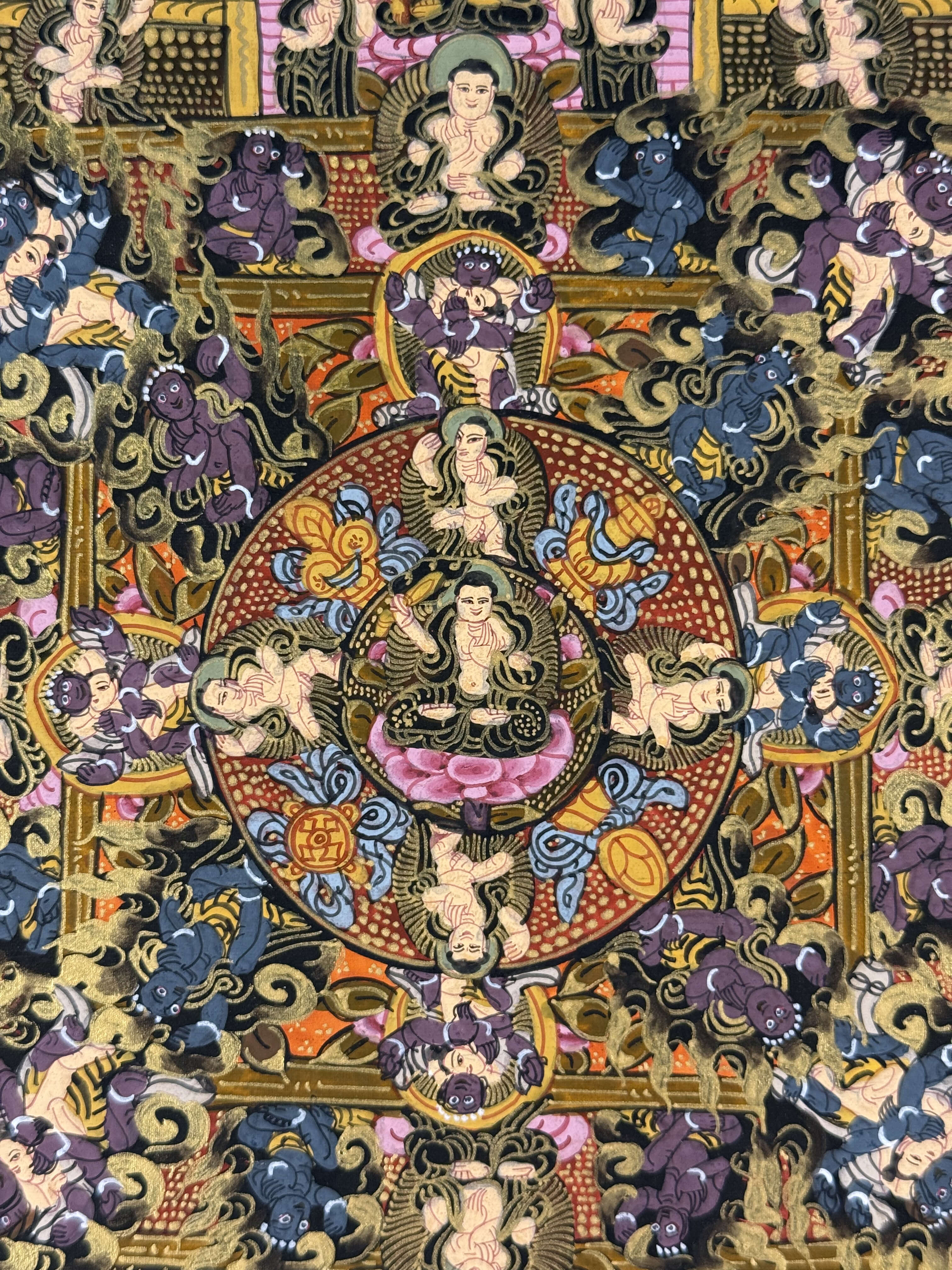


Mandalas are used in meditation, rituals, and tantric practices, especially in Tibetan Buddhism. The center usually represents the enlightened mind or the Buddha, symbolizing the inner journey towards spiritual awakening. Creating and visualizing the mandala helps practitioners focus their mind and realize the interconnectedness of all beings.
Some famous mandalas include the Five Dhyani Buddhas Mandala, each representing a different aspect of enlightened consciousness.


Mandalas are not only decorative but serve as visual aids for meditation, particularly in Tantric and Tibetan Buddhism. Practitioners visualize themselves entering the mandala, moving inward from the outer edge toward the center, symbolizing the inner journey toward enlightenment. The creation of a mandala—especially sand mandalas—is often done as a ritual, and it is destroyed afterward to signify impermanence.


Mandalas are not only decorative but serve as visual aids for meditation, particularly in Tantric and Tibetan Buddhism. Practitioners visualize themselves entering the mandala, moving inward from the outer edge toward the center, symbolizing the inner journey toward enlightenment. The creation of a mandala—especially sand mandalas—is often done as a ritual, and it is destroyed afterward to signify impermanence.


Mandalas are not only decorative but serve as visual aids for meditation, particularly in Tantric and Tibetan Buddhism. Practitioners visualize themselves entering the mandala, moving inward from the outer edge toward the center, symbolizing the inner journey toward enlightenment. The creation of a mandala—especially sand mandalas—is often done as a ritual, and it is destroyed afterward to signify impermanence.